
In the conventional understanding, retractable seating is often regarded as a purely functional facility — a solution designed for sports venues and cultural spaces, enabling rapid transitions between audience seating configurations for different events.
But the question is — are only these spaces in need of transformation?
When office environments need to support both collaboration and presentation, when commercial spaces pursue a balance between efficiency and experience, and when premium public spaces emphasize design expression and atmosphere, the limitations brought by fixed furniture are becoming increasingly apparent.
This leads to a more fundamental question:
Can retractable seating truly become part of complex modern spaces, rather than existing only within traditional sports venues?
During the development of the Crear retractable seating system, we focused on two key capabilities: adaptability across diverse scenarios and the ability to integrate seamlessly with architectural aesthetics.
First Breakthrough: Giving Every Inch of Space a Purpose
The logic behind traditional retractable seating is straightforward — when deployed, it becomes seating; when stored, it saves space.
However, saving space does not necessarily mean creating value.
What Crear aims to transform is the “silence” of space when the seating system is stored.
Built around the demand for multi-functional environments, the system redefines how space can operate.
01. When Deployed
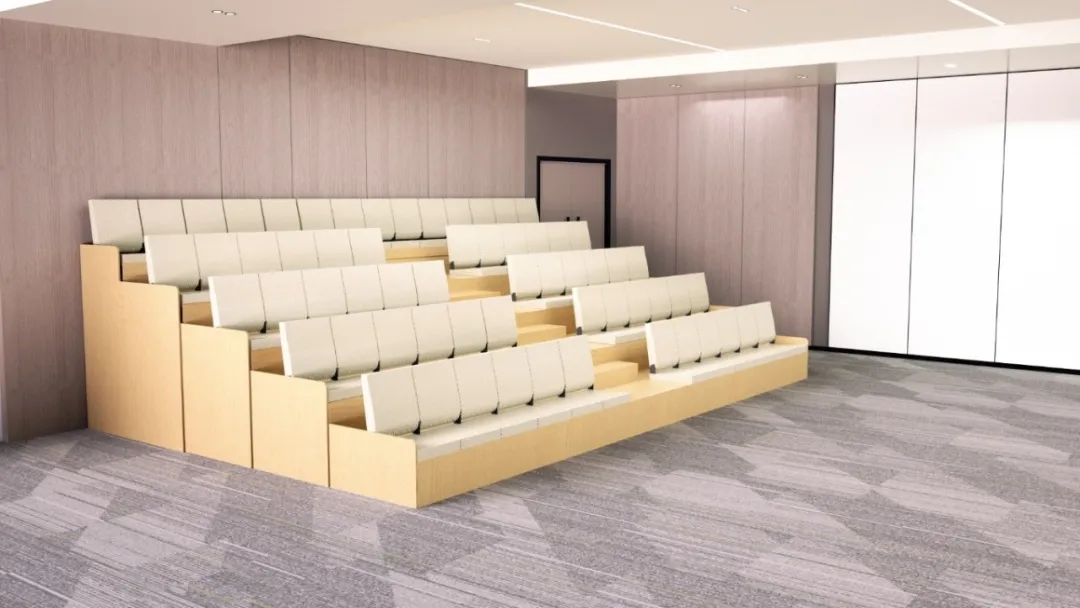
The system creates a structured tiered layout with optimized sightlines and spatial organization, making it suitable for high-density applications such as conferences, training sessions, presentations, and collaborative events.
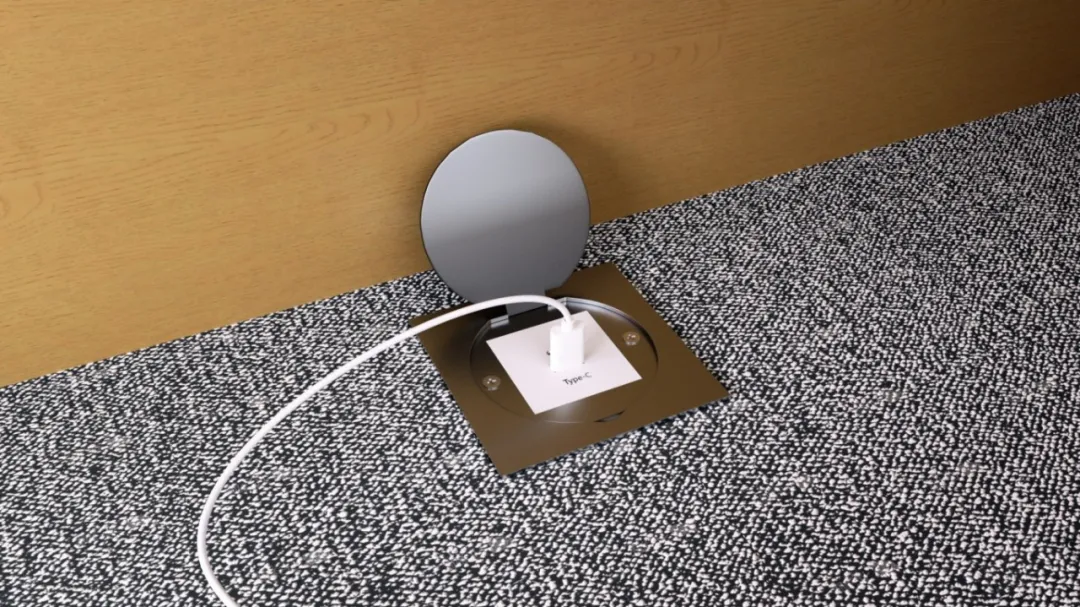
Integrated power supply capabilities support long-duration communication and the use of multiple devices, meeting the evolving needs of modern workplaces and public environments.
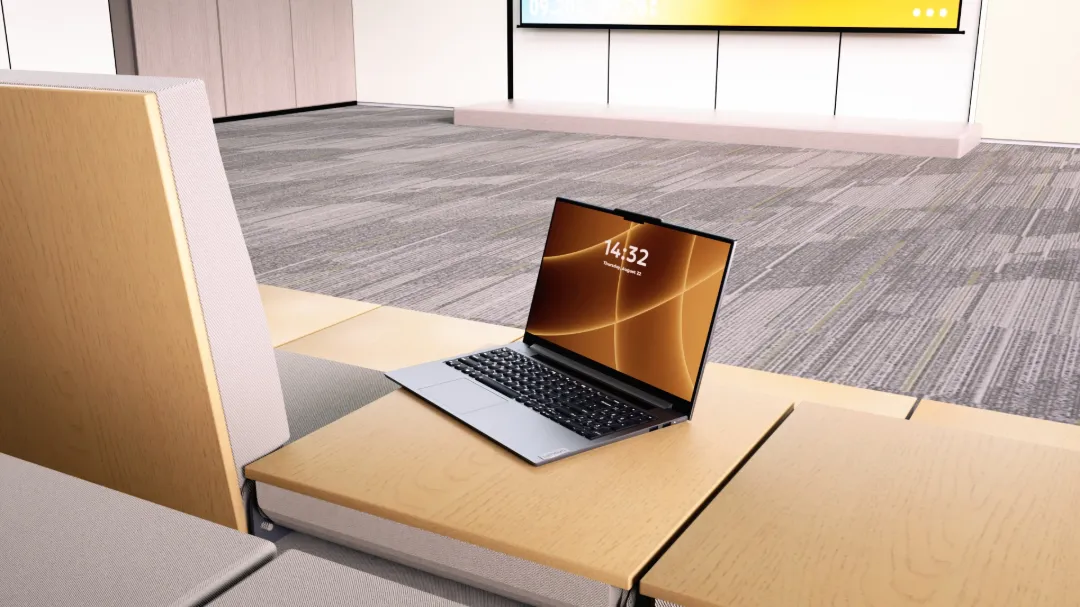
More importantly, the seating configuration adapts to different scenarios. In its standard form, it provides comfortable audience seating; when the seats are folded, the wooden rear structure transforms into a temporary tabletop, offering additional support for discussion, note-taking, and interactive activities.
02. When Stored
The system retracts to a compact, cabinet-like scale, maximizing the release of usable floor space and allowing the environment to return to an open configuration.
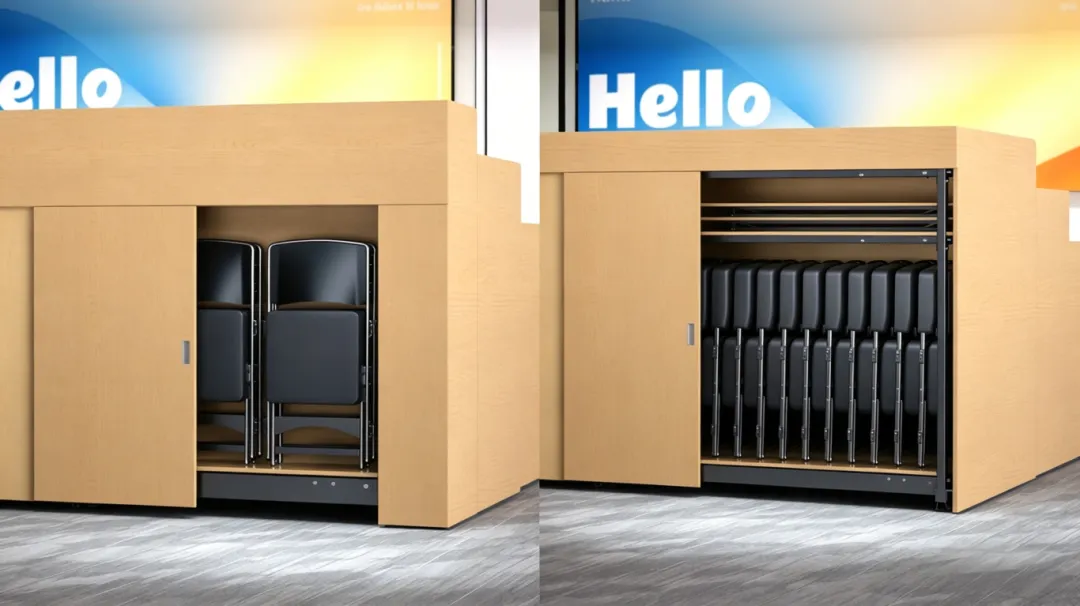
At the same time, the lower structure is redefined as an integrated storage module. By combining structure and function, it provides storage for folding chairs that can be quickly deployed when additional seating capacity is required.
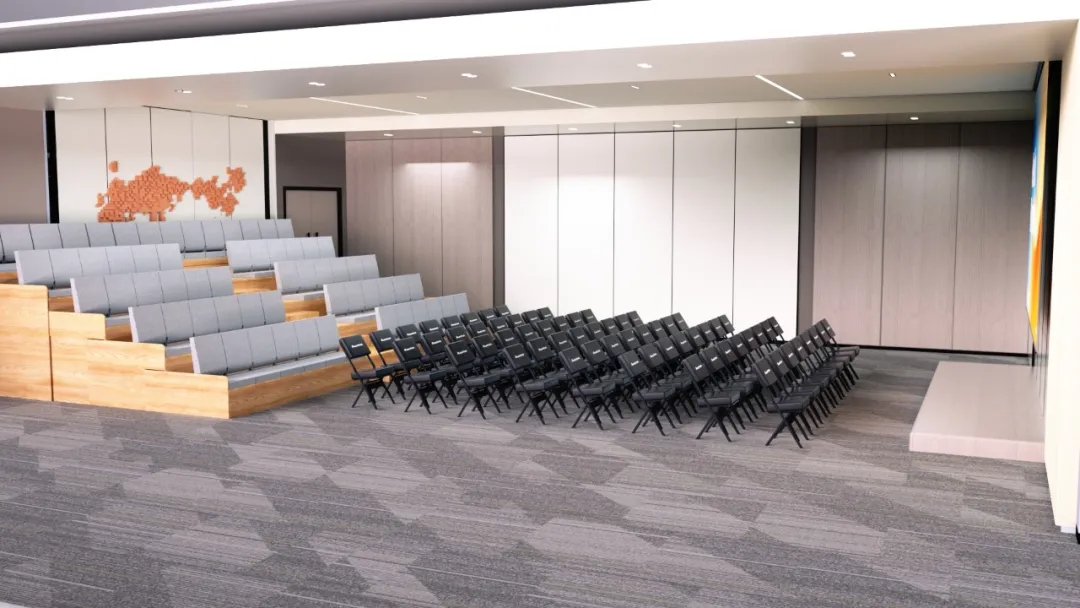
This is not simply a mechanical folding solution.
It represents continuous exploration of dimensional control, retractable mechanisms, and spatial efficiency — transforming storage itself into an active part of spatial operation.
When a space can naturally transition between meeting, interaction, and open-use modes, retractable seating is no longer just a facility that disappears after use. It becomes an essential element that participates in the continuous evolution of the space.
Second Breakthrough: Making the Seating System Disappear Into the Space
Exposed metal structures and purely functional appearances often conflict with the design language of premium offices and contemporary public spaces.
Crear takes a different approach — redefining the visual identity of retractable seating.
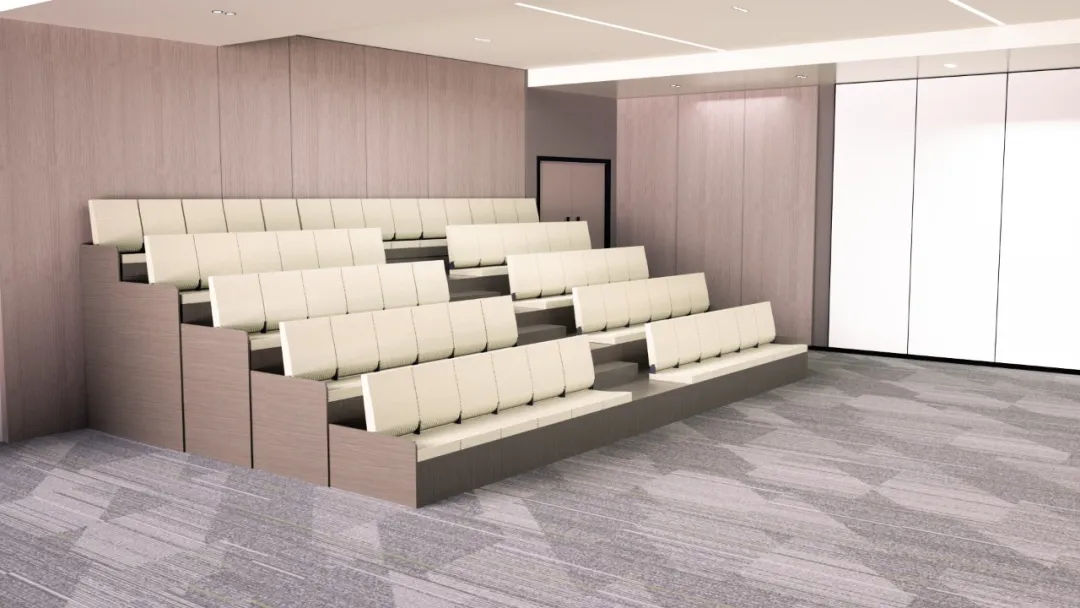
The system adopts a wood-finished structural design combined with fully upholstered wooden-back seats, creating a unified aesthetic language. Visually, it is closer to a piece of furniture or an architectural element rather than an independent mechanical installation.
However, this approach introduces significant technical challenges:
- Maintaining the stability of wood finishes within high-frequency retractable structures;
- Ensuring precision during modular assembly and movement;
- Balancing material aesthetics with structural safety.
Through multiple rounds of structural optimization and surface finishing improvements, the Crear team established a refined exterior expression supported by a reliable engineering foundation.
The final result is a seating system that does not compete for attention, but naturally integrates into the environment.
Present, yet unobtrusive.
When scenario adaptability and aesthetic integration are achieved simultaneously, the meaning of retractable seating is fundamentally transformed.
It is no longer simply a product.
It becomes a medium connecting people, spaces, and experiences.
Throughout this technological exploration, Crear does not pursue functional complexity for its own sake. Instead, it returns to two essential questions:
How can spaces become more flexible?
How can design expression become more natural?
This may be the true value of Crear.